 SHOULDER






Reverse total shoulder replacement for eccentric osteoarthritis of the shoulder
Reverse total shoulder replacement is a reliable and well-established procedure that eliminates pain and restores use of the arm when osteoarthritis is combined with rotator cuff failure. It is now the standard surgical treatment for advanced off-centre shoulder osteoarthritis.
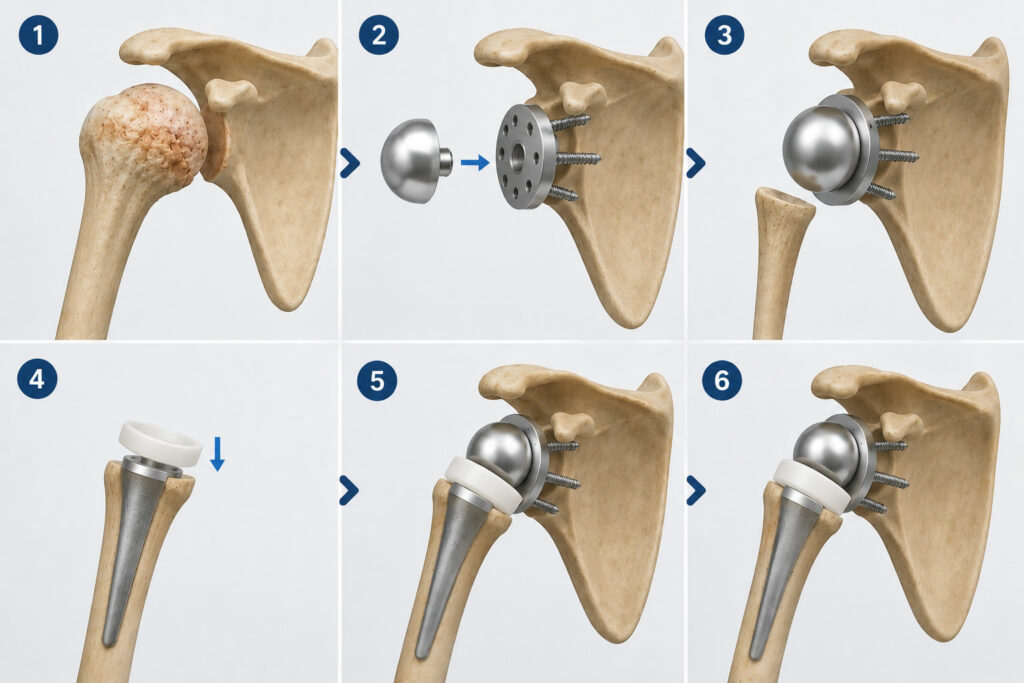
What is eccentric shoulder osteoarthritis?
Osteoarthritis of the shoulder is the gradual wear and tear of the cartilage in the shoulder joint. In some advanced cases, this wear and tear is accompanied by significant damage to the rotator cuff (the tendons that enable the arm to be raised and stabilised).
When the rotator cuff no longer functions properly, the head of the humerus gradually moves upwards beneath the acromion.
The joint then becomes ‘off-centre’, leading to:
- chronic pain;
- significant loss of mobility;
- a reduction in strength;
- difficulty with everyday activities (doing one’s hair, getting dressed, reaching for objects high up).
Why recommend a reverse shoulder replacement?
In this situation, a conventional anatomical prosthesis would not function correctly as it relies on an intact rotator cuff.
The reverse total shoulder replacement alters the anatomy of the joint:
- a ball is attached to the shoulder blade (glenoid);
- a socket is implanted on the humerus.
This inversion allows the deltoid muscle to take over part of the rotator cuff’s function and once again become the shoulder’s main mover.
What are the objectives of the intervention?
The main aim of the procedure is to:
- relieve pain
- restore the patient’s independence
- improve arm elevation in patients with pseudo-paralysis caused by eccentric osteoarthritis of the shoulder
The expected outcomes are generally:
- the disappearance or marked reduction of pain
- a significant improvement in quality of life
However, mobility is not always fully restored, and certain complex movements behind the back may remain limited (internal rotation – hand at the level of the sacrum)
How is the procedure carried out?
In most cases, this surgery is carried out on an outpatient basis or with an overnight stay following the operation if the patient lives a long way away or is living alone.
The operation is carried out under general anaesthesia, most often combined with a regional anaesthetic.
It usually lasts 1 hour.
The implants are fixed to the bone to recreate a stable and functional joint.
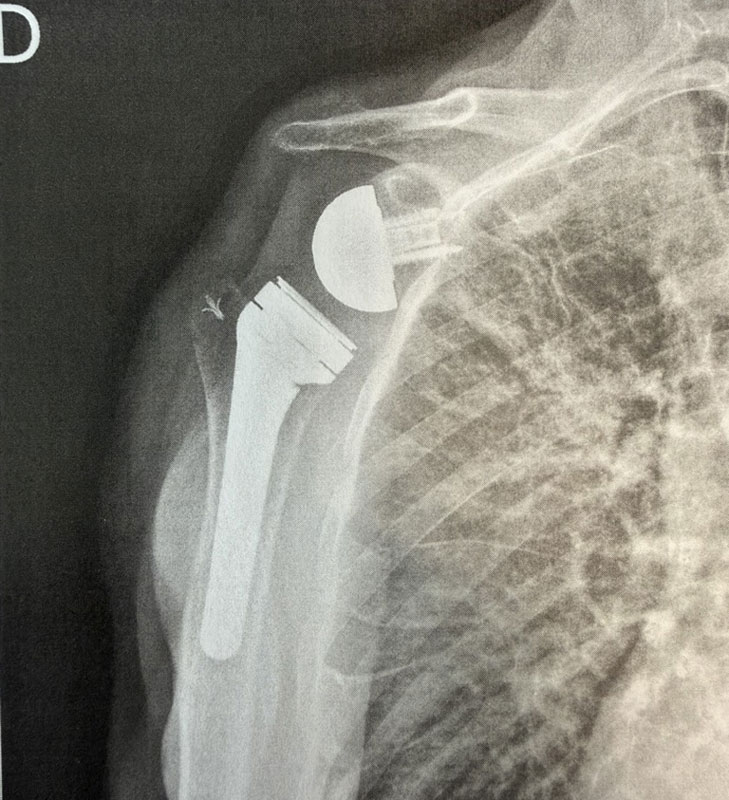
Rehabilitation and recovery
After the operation:
- the arm is placed in a sling for 15 days, worn only at night or during periods of rest (naps, car journeys, etc.)
- rehabilitation begins promptly, following a tailored programme
- Light daily activities are gradually resumed from the first few days after the operation (eating unaided, personal hygiene, using the telephone or computer, etc.)
The usual timeframes are:
- basic independence: 2 to 6 weeks;
- significant functional recovery: 3 months;
- results close to the final outcome: 6 to 12 months.
Lifespan of the prosthesis
Modern reverse prostheses are highly reliable.
Current studies show that the vast majority of implants are still functional after 10 to 15 years, with high levels of patient satisfaction.
What are the risks?
As with any surgical procedure, this operation carries certain risks:
- infection;
- haematoma;
- stiffness;
- dislocation of the prosthesis;
- periprosthetic fracture;
- rare nerve damage;
- long-term wear or loosening of the implants.
These complications remain rare when the indications and follow-up are appropriate.