HAND
HAND






Trapeziometacarpal prosthesis for the thumb
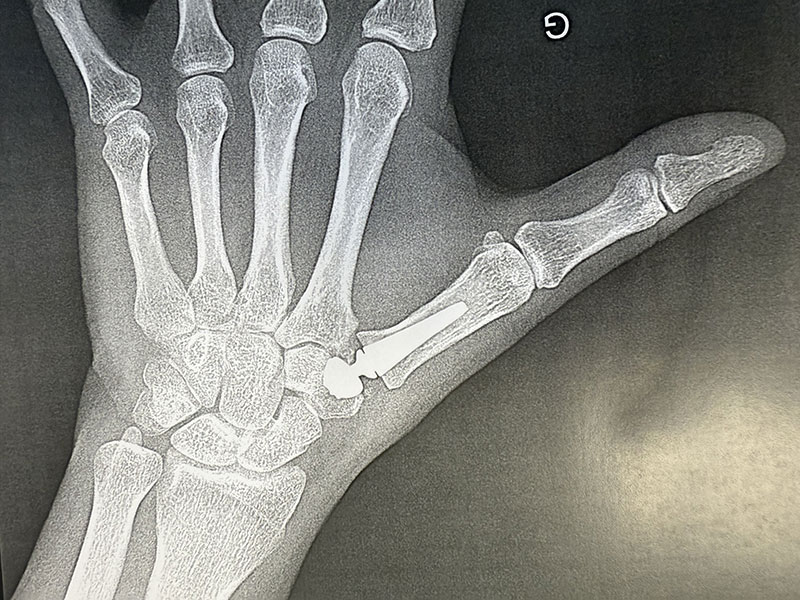
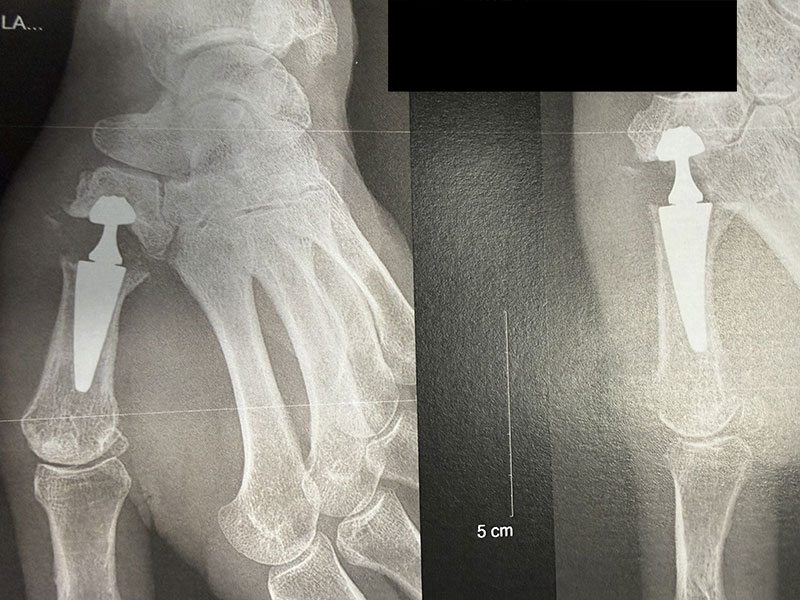
The trapeziometacarpal prosthesis is a modern alternative to trapeziectomy in selected patients with symptomatic rhizarthrosis. It aims to restore a mobile and stable joint whilst enabling rapid functional recovery. Regular clinical and radiographic follow-up is recommended to monitor the successful integration of the implants and their stability over time.
What is rhizarthrosis?
Rhizarthrosis is the wear and tear of the cartilage at the base of the thumb, between the first metacarpal and the trapezium bone. This joint is essential for pinching and grasping movements.
As the cartilage gradually wears away, bone rubs against bone, causing:
- Pain at the base of the thumb
- Loss of grip strength
- Difficulty opening a jar, turning a key or grasping objects
- Progressive deformity of the thumb
When should a trapeziometacarpal prosthesis be considered?
Surgery may be considered when:
- The pain becomes debilitating.
- Medical treatments (splints, physiotherapy, injections) are no longer effective.
- The mobility and strength of the thumb are significantly reduced.
The prosthesis is particularly suitable for patients who wish to maintain good thumb mobility and resume their daily activities quickly.
Principle of the procedure
The procedure involves replacing the worn joint with a prosthesis that replicates the natural function of the thumb joint.
The surgery is performed through a small incision at the base of the thumb. The worn joint surfaces are replaced with implants that restore:
- Mobility
- Stability
- Grip strength
- Joint comfort
What are the advantages of the prosthesis?
Compared with traditional trapezium resection techniques (trapeziectomy), the prosthesis often allows for:
- A faster recovery.
- Better preservation of strength.
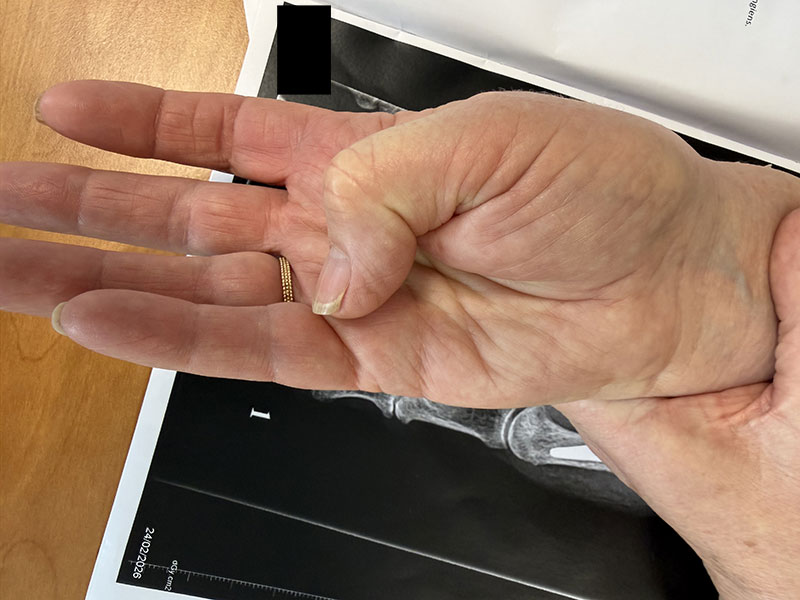
- More natural movement.
- An early return to daily activities.
- Preservation of thumb length.
Post-operative care
- The procedure is usually carried out on an outpatient basis under local anaesthesia only, where possible and depending on the patient.
- Immobilisation with a splint for 2 weeks.
- Self-rehabilitation Return to normal activities within a few weeks.
- Gradual improvement in strength over several months.
What are the risks?
As with any surgery, this procedure carries certain risks:
- Infection
- Haematoma
- Stiffness
- Persistent pain
- Dislocation of the prosthesis
- Long-term loosening or wear of implants
- Exceptional need for revision surgery
These complications remain rare when the indications are correctly established.
Expected results
The main objective is to achieve:
✓ A significant reduction in pain
✓ Improved thumb function
✓ Restoration of grip strength
✓ Maintenance of near-normal mobility
The majority of patients regain comfortable use of their thumb for activities of daily living, work and leisure.