 THE EXPERTS WHO SUPPORT YOU






Co-ordinated and personalised care:
the right treatment, at the right time
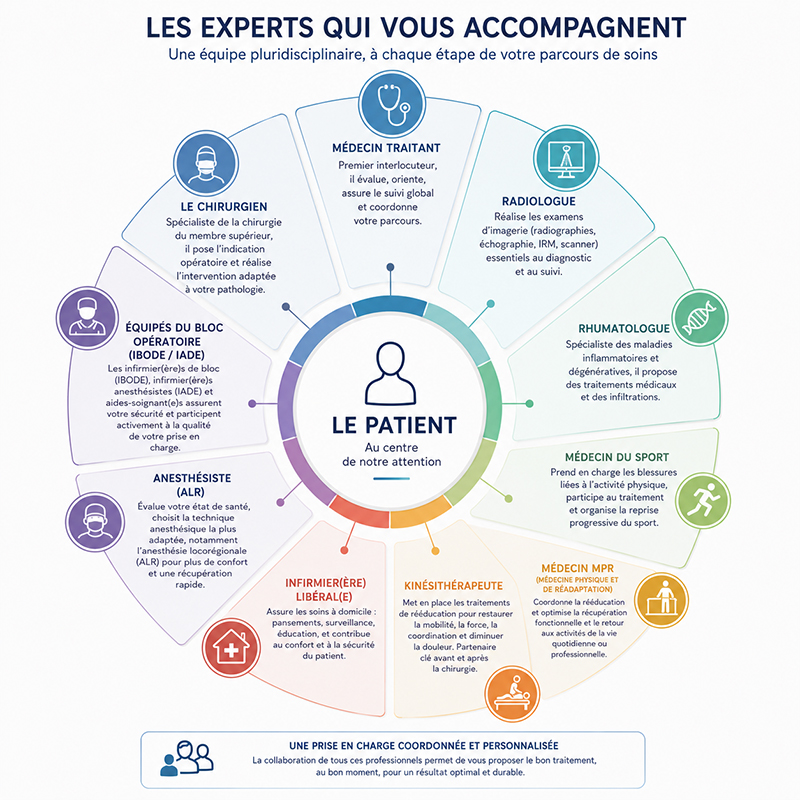
Conditions affecting the shoulder, elbow, wrist and hand are rarely the responsibility of a single doctor. Effective care relies on close collaboration between several healthcare professionals, each contributing their expertise at a specific stage of the care pathway.
Surgery is just one part of the care pathway.
Our aim is not to perform more operations, but to offer each patient the solution best suited to their situation, whether that be medical, rehabilitative or surgical.
ANAESTHESIA APPOINTMENT
Book an appointment
with our team of anaesthetists.
The GP: the first point of contact
The GP plays a vital role. They make the initial diagnosis, assess risk factors, order the initial tests and refer the patient to the most appropriate specialist. They also monitor treatment and manage any associated conditions.
The radiologist: a key player in diagnosis
The radiologist plays a role at crucial stages of the care pathway. Using X-rays, ultrasound, MRI or CT scans, they help refine the diagnosis, assess lesions and contribute to the choice of treatment. Their expertise is also invaluable in carrying out interventional procedures such as ultrasound-guided injections.
The rheumatologist: expertise in medical treatments
The rheumatologist manages inflammatory, degenerative or microcrystalline conditions. Medical treatments, injections and specialist follow-up often help to alleviate symptoms or delay the need for surgery.
The Physical Medicine and Rehabilitation (PMR) Specialist
The rehabilitation specialist coordinates functional recovery following trauma, surgery or a neurological condition. They tailor rehabilitation programmes, supervise the use of assistive devices where necessary, and facilitate a return to daily, work-related or sporting activities.
The sports doctor
The sports medicine doctor supports patients with injuries related to physical activity. They are involved in diagnosis, conservative treatment and the development of protocols for returning to sport, in collaboration with the surgeon and physiotherapists.
The physiotherapist: a key player in treatment
Rehabilitation is often the main form of treatment for many upper limb conditions. It helps to restore mobility, strength and coordination, and to reduce pain.
Following surgery, the quality of rehabilitation largely determines the functional outcome. Each programme is tailored to the specific condition, the surgical technique used and the patient’s goals.
The anaesthetist: an essential partner in surgery
The anaesthetist assesses the patient before the operation, tailors the anaesthetic strategy and ensures the patient’s safety throughout their hospital stay.
In upper limb surgery, the use of regional anaesthesia is a major advantage. This technique provides excellent pain management, promotes faster recovery, reduces the need for opioid analgesics and improves patient comfort in the context of day surgery.
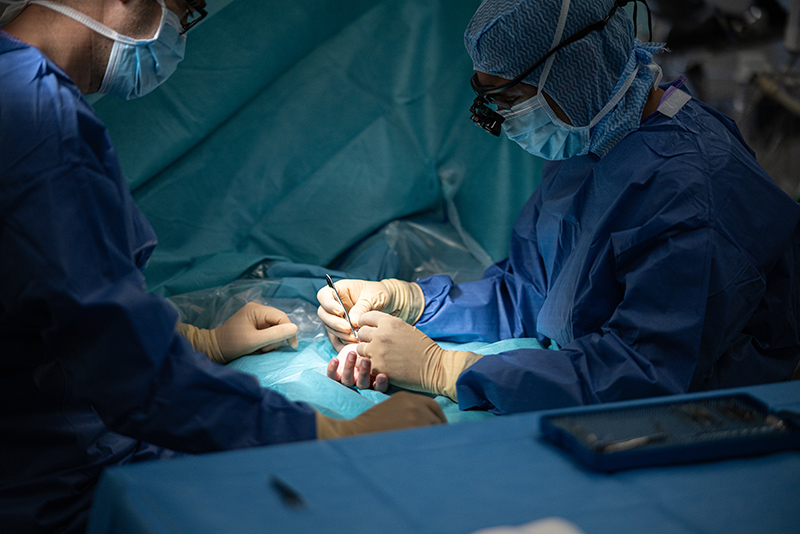
Operating theatre teams: essential expertise
The success of a surgical procedure also depends on the experience of the operating theatre teams. State-registered operating theatre nurses (IBODE), anaesthesia nurses (IADE), nursing assistants and all operating theatre staff contribute every day to the safety, smooth running and quality of care.
Their in-depth knowledge of upper limb surgical techniques, specialist instruments and safety procedures plays a direct part in the quality of the surgical outcome.
Surgery as part of a comprehensive care pathway
When surgery becomes necessary, it forms part of a coordinated care pathway comprising:
✔ a comprehensive clinical assessment;
✔ appropriate imaging;
✔ consultation with the relevant healthcare professionals;
✔ personalised pre-operative preparation;
✔ appropriate anaesthesia, including regional anaesthesia where indicated;
✔ surgery performed by an experienced team;
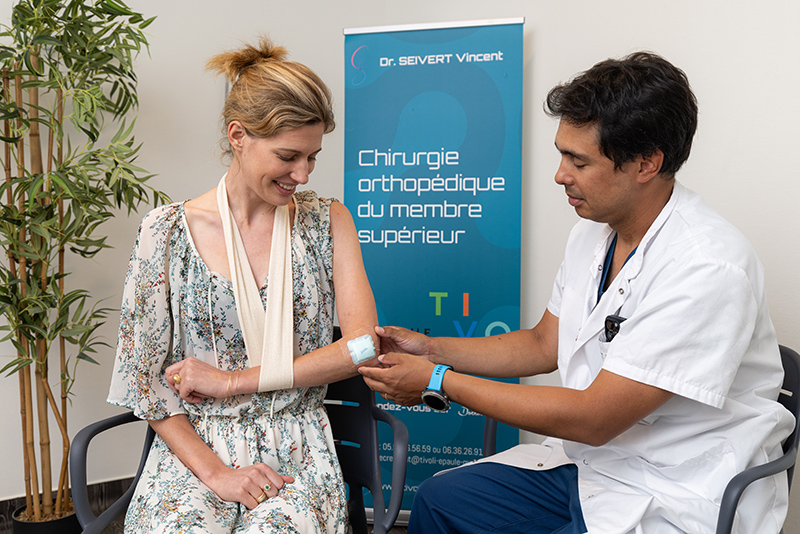
✔ personalised rehabilitation;
✔ regular follow-up until full functional recovery.
ANAESTHESIA APPOINTMENT
Book an appointment
with our team of anaesthetists.